India's equity markets will scale fresh all-time highs: Nilesh Shah
Synopsis
Despite near-term challenges from global and domestic events, Indian equity markets will eventually scale fresh all-time highs, says Kotak Mahindra AMC's Nilesh Shah, citing India's ability to overcome risks from oil prices to monsoon.
Indian equity markets may continue to face near-term challenges from global and domestic developments, but will eventually scale fresh all-time highs, according to Kotak Mahindra Asset Management Company Nilesh Shah. Shah's optimism springs from India's ability to overcome concerns ranging from oil prices to monsoon-related risks and deep-tech competitiveness.
Market Outlook and Key Concerns
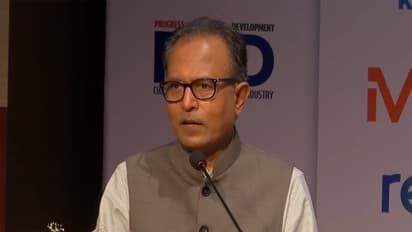
"Whether that happens in the near term or over a period of time, I have no doubt in my mind that eventually market will touch all-time high. There were multiple concerns impacting market. Oil is one. Obviously, people will look at what happens on the ground," Shah told ANI on the sidelines of the 16th edition of the Mindmine Summit, 2026.
"Now the focus will shift to Monsoon. And finally the deep tech. How does India capture in the deep-tech space, some of the opportunities. So there will be concerns for the market, but eventually India will ride over all the wall of worries," Shah said.
Impact of US-Iran Deal
His remarks came as markets assess the potential impact of a possible US-Iran deal on global energy prices and supply chains. He noted that India, one of the world's largest oil importers, could benefit significantly if the agreement leads to lower oil prices and smoother supplies.
"With the US-Iran deal, hope is that oil prices will come down. They are down 6 per cent as we speak. Second, the supply will normalize not only in oil but also in chemicals like sulphur which are used for fertilizer," he said.
Macroeconomic Commentary
According to Shah, lower energy and input costs could help ease pressure on several macroeconomic indicators, including the rupee, inflation, the current account deficit, economic growth and corporate profitability.
Rupee Outlook
On the rupee, Shah said concerns about the currency weakening to triple-digit levels against the US dollar are unlikely to materialise in the near-to-medium term despite recent liberalisation measures. "With the ECB, FCNR and bank borrowing norms liberalized, I think someday rupee will hit the century, go into triple digit. But that's not likely to happen in the near-to-medium term. I think now rupee depreciation will be about 2 per cent a year," he said.
Equity Valuations
Commenting on equity valuations, Shah said further re-rating of Indian markets would be difficult unless corporate earnings growth accelerates substantially. "Our markets will deliver returns in line with earnings growth. We are already at a premium to other markets. We are trading at fair value of our historical averages. Now to expect that we'll get re-rated further up, we'll have to deliver higher earnings growth," he said.
Private Credit Market Growth
Shah also highlighted the rapid growth of the private credit market, describing it as a result of limited formal financing avenues for corporate restructuring and acquisition transactions. "So private credit market is booming. It's a regulatory arbitrage. Today for corporate restructuring, for acquisition, there's limited formal financing available. Hence, promoters have to come to the informal or the private credit AIF market," he said, while cautioning that the sector must carefully manage liquidity and risk.
Advice for Retail Investors
For retail investors, Shah advised against discontinuing systematic investment plans (SIPs) during periods of market volatility. He said SIPs reward investors who remain disciplined through both rising and falling markets and cited the experience of investors during the March 2020 market downturn, when those who continued or increased their SIP contributions ultimately generated superior returns.
Foreign Investment Flows
On foreign investment flows, Shah said India receives about 5 per cent of global FDI, higher than its roughly 3.5 per cent share in global GDP. He noted that while foreign institutional investor (FII) outflows have been seen, partly due to high-frequency trading-related factors, India has the potential to increase its share of both FDI and foreign portfolio allocations by showcasing successful investment outcomes and empowering regulators to better manage high-frequency trading activity. (ANI)
(Except for the headline, this story has not been edited by Asianet Newsable English staff and is published from a syndicated feed.)Stay updated with all the latest Business NewsShare Market NewsIPOsGold PriceDA Hike8th Pay CommissionAsianet News Official App