India to get 8 more semiconductor plants in next 8 years: PM Modi
Synopsis
PM Modi announced India will get 5-8 new semiconductor plants in 7-8 years, building on three existing facilities that are already exporting. This initiative is a cornerstone of India's self-reliance agenda and a 'great highway' to development.
India is expected to see another five to eight semiconductor plants begin operations over the next seven to eight years, underlining the government's push to build domestic chip manufacturing capacity as a key pillar of its self-reliance and development agenda, Prime Minister Narendra Modi said on Saturday.
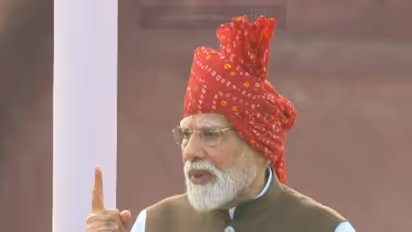
Addressing the nation from the Red Fort on the 80th Independence Day, Modi said three major semiconductor plants had already been started in the country and that production from these facilities had begun to be exported. He said semiconductors had become indispensable across electronic goods, medical equipment and transportation systems, with the functioning of the modern technology ecosystem increasingly dependent on chips.
India's Push for Self-Reliance
"Bharat has begun establishing its own semiconductor manufacturing capacity" in the direction of becoming self-reliant, Modi said, adding that the expansion of domestic chip production would provide a "great highway" towards building a developed India. The Prime Minister linked the semiconductor push with India's broader strategy of reducing dependence on overseas supplies and strengthening domestic capabilities. He said self-reliance had become increasingly important as countries sought to protect their own interests and resources amid global disruptions.
Focus on Critical Minerals and Energy Security
Modi also highlighted critical minerals as another strategic area for India's technology ambitions. He said the entire technology sector was dependent on critical minerals and that India was working to secure its supplies through the National Critical Minerals Mission and the Critical Minerals Corridor announced in the Budget.
He said India was also signing agreements with several countries to secure access to critical minerals and noted that countries globally were beginning to place greater trust in India in this area. The Prime Minister placed semiconductors and critical minerals alongside energy security as essential building blocks for future technologies. He said chips, artificial intelligence and data centres would require large quantities of electricity, making energy security equally important as India expands its technology capabilities.
Vision for a Manufacturing and Innovation Hub
Modi's remarks come as India seeks to strengthen its position across the technology value chain, moving beyond being a market for advanced technologies towards becoming a manufacturing and innovation hub. He later identified manufacturing and technology and innovation among the seven key areas--or 'Sapta Dhara'--that would drive India's development, stressing the need for India to build capabilities across entire value chains, from components and design to finished products. (ANI)
Stay updated with all the latest Business NewsShare Market NewsIPOsGold PriceDA Hike8th Pay CommissionAsianet News Official App