India strives for self-reliance in critical minerals: Minister Dubey
Synopsis
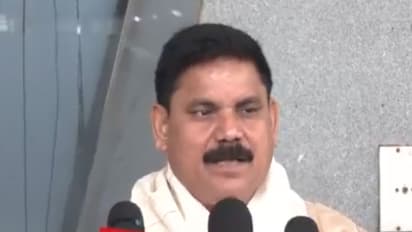
Minister Satish Chandra Dubey stated that India is making continuous efforts to become self-reliant in critical minerals. He was speaking at an industry roadshow in Raipur aimed at connecting authorities with industry leaders for technical dialogue.
India has made continuous efforts to become self-reliant in critical minerals to secure its domestic industrial and clean energy supply chains, Minister of State for Coal and Mines Satish Chandra Dubey stated while speaking to the media at an industry roadshow on Monday.
"We all know that critical minerals are very important for this country. And India has made continuous efforts to become a self-reliant critical mineral. This is what the roadshow is about today," Dubey said.
Highlighting the purpose of the outreach event, the Minister noted that the initiative directly connected state authorities with industry leaders to address operational and technical aspects.
"This is a roadshow. A roadshow means there is dialogue between the entrepreneurs who participate and the officials," Dubey said. He further pointed out the operational focus of the gathering, stating, "Understanding and explaining the technical matter. This is the reason we have come here."
National Critical Mineral Mission
The engagement comes in the backdrop of the government's National Critical Mineral Mission (NCMM), which was introduced for a seven-year period spanning 2024-25 to 2030-31. The mission carries a proposed expenditure of Rs 16,300 crore, alongside an expected investment of Rs 18,000 crore from Public Sector Undertakings (PSUs) and other stakeholders.
These measures follow the identification of 30 critical minerals by the Ministry of Mines. The designated list includes Antimony, Beryllium, Bismuth, Cobalt, Copper, Gallium, Germanium, Graphite, Hafnium, Indium, Lithium, Molybdenum, Niobium, Nickel, PGE, Phosphorous, Potash, REE, Rhenium, Silicon, Strontium, Tantalum, Tellurium, Tin, Titanium, Tungsten, Vanadium, Zirconium, Selenium, and Cadmium.
Incentives for Domestic Recycling
To complement primary extraction and curb external import dependency, the Union Cabinet sanctioned a Rs 1,500 crore incentive scheme under the NCMM. The scheme focuses on expanding the country's domestic recycling capacity through secondary sources, including electronic waste, scrap from lithium-ion batteries, and parts from end-of-life vehicles.
Through support directed at both emerging and existing recycling units, the programme targets the creation of a 270 kilo ton annual recycling capacity and the domestic production of 40 kilo ton of critical minerals. The framework aims to bring in approximately Rs 8,000 crore in investments, while generating an estimated 70,000 jobs.
Supporting National Climate Goals
Securing steady supplies of these resources supports broader national climate targets, which include lowering the emissions intensity of the gross domestic product by 45 per cent by 2030 compared to 2005 levels, obtaining half of total electric power capacity from non-fossil sources by 2030, and reaching net-zero emissions by 2070. (ANI)
(Except for the headline, this story has not been edited by Asianetnews Editorial staff and is published from a syndicated feed.)Stay updated with all the latest Business NewsShare Market NewsIPOsGold PriceDA Hike8th Pay CommissionAsianet News Official App