IMF: Mideast conflict's lasting consequences for global economy
Synopsis
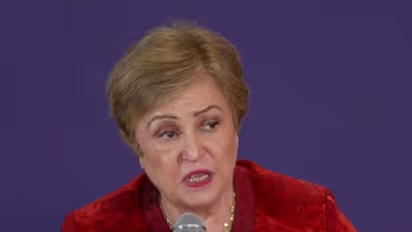
IMF chief Kristalina Georgieva warns the Middle East conflict is a major global economic shock. It has severely disrupted energy supplies, damaged critical infrastructure, and poses a lasting threat to global growth, inflation, and energy markets.
Managing Director of the International Monetary Fund (IMF), Kristalina Georgieva, last week warned that the ongoing Middle East conflict has triggered a major global economic shock, with lasting consequences for growth, inflation, and energy markets.
Widespread Disruption to Global Trade
Delivering a curtain-raiser speech ahead of the IMF-World Bank Spring Meetings, Georgieva said the war has severely disrupted oil and gas supplies, damaged critical infrastructure, and heightened uncertainty in global trade and transport routes.
"The conflict has caused considerable hardship around the globe. My heart goes out to all people affected by this war and all wars," noted the IMF Director
Energy Infrastructure Under Threat
She noted that key energy hubs, including major liquefied natural gas facilities in the Gulf, have suffered significant damage and may take years to fully recover, contributing to persistent supply constraints.
"Take Qatar's Ras Laffan complex--a tremendously important example of strategic investment done right; producer of 93 per cent of the Gulf's LNG, some 80 per cent of it going to Asia-Pacific, a region that now endures serious fuel shortages. Ras Laffan has essentially been shut since March 2, took direct hits on March 19, and could take 3-5 years to restore to full capacity," said Georgieva.
Economic Fallout and Policy Warnings
Describing the situation as a "classic negative supply shock," the IMF chief said countries will face slower economic growth even under a best-case scenario of durable peace. She added that over 80 per cent of countries--being net oil importers--are particularly vulnerable to rising energy costs and external imbalances.
Georgieva cautioned policymakers against unilateral measures such as export restrictions or price controls, warning that such steps could aggravate global instability. She urged governments to remain agile and coordinated in their policy responses to avoid worsening inflationary pressures.
The IMF also highlighted uneven global impacts, with oil-importing and conflict-affected economies bearing the brunt, while some exporters may see temporary gains but still face broader economic spillovers. The remarks come amid growing concerns that the conflict could leave lasting "scarring" on the global economy, disrupt supply chains, and increase demand for IMF financial support across vulnerable nations. (ANI)
Stay updated with all the latest Business NewsShare Market NewsIPOsGold PriceDA Hike8th Pay CommissionAsianet News Official App