Hitachi Vantara keeps door open to expand manufacturing to India
Synopsis
Hitachi Vantara is considering expanding its manufacturing footprint to India to move production closer to customers, a top executive said. The company views India as a 'possible' destination amid a rapidly evolving geopolitical landscape.
Hitachi Vantara is keeping the door open to expanding its manufacturing footprint to India from other countries, as the company looks to move production closer to customers amid a rapidly evolving geopolitical landscape.
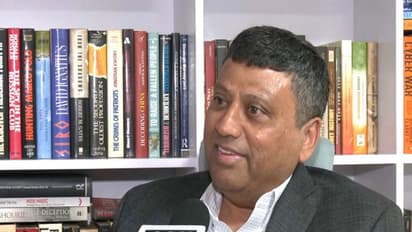
Responding to a question from ANI on whether some of the company's future production lines could be in India, Jay Subramanian, Senior Vice President and General Manager, Core Storage Platform at Hitachi Vantara, said the company is "always looking for opportunities" to localise operations and tap into regional resources, making India a "possible" destination as its economy continues to grow. "We are always looking for opportunities to figure out how can we get closer to the customer. From that perspective, there is no reason why we will not be looking at those kinds of options. I mean, just especially with the current geopolitical world, we are always looking for opportunities to figure out what can be done closer to where the customers are and how do you make sure that we can tap into those kinds of resources," Jay Subramanian told ANI during his ongoing India visit. "Possibly, absolutely," he supplemented.
About Hitachi Vantara
Explaining the company's core business, Jay Subramanian said the US-headquartered company provides data management infrastructure to some of the world's largest enterprises across industries, including healthcare, financial services, education, and transportation.
The companies include the Fortune 100 Hitachi Vantara, a wholly owned subsidiary of Hitachi Ltd, is a provider of critical data storage and hybrid cloud management solutions and platforms. In India, it has a combination of sales and marketing operations catering to large enterprises, banks, and public sector organisations. Subramanian said that the company has also made significant investments in research and development across Bengaluru, Hyderabad, and Pune.
AI as a Key Driver
AI has emerged as a key driver of change for the company's business globally. Subramanian said the adoption of artificial intelligence has significantly accelerated data analysis and decision-making processes that earlier took days and involved heavy manual effort.
"This is not meant to be like this is going to replace people or replace jobs. This is essentially going to change the paradigm," he said. "What used to take many days and a lot of manual transactions can now happen. The analysis can happen in a short period of time."
He noted that the growing use of AI has also translated into cost efficiencies, largely by reducing the time and effort required for manual processes. However, Subramanian believes that cost reduction is not driven by AI alone.
Views on Indian Economy and Governance
With the Union Budget for India around the corner, Subramanian was asked if he had any expectations from the Indian government. He said the company has no specific expectations and is seeking a friction-free business environment.
"The Indian government has been doing a very good job in terms of opening up the economy for the broader good. And I think as long as we reduce friction, we are always looking for those kinds of things. And anything that the Indian government does in terms of enabling us to do more business in India, and also ensuring that we remove friction for us, that essentially speeds things up, and that's all we can look for. I'm not going to go and ask for, give us the incentives, but that's kind of what I would say, enabling us to be able to do more business in terms of how do we reduce friction is relevant," he said.
Reflecting on India's transformation over the years, Subramanian, who is Indian-born, highlighted the country's rapid digital adoption, particularly in payments and public digital infrastructure. "One of the big things that I see in India since the time I left, a while back, was around how cash transactions have now become digital transactions, everybody accepts UPI and so forth, and those are things that are absolutely phenomenal."
Future Growth Strategy in India
Looking ahead, he said Hitachi Vantara's growth strategy in India will continue to focus on financial services and government clients, while gradually expanding into more mainstream enterprise use cases subsequently.
"Currently, we have a lot of our focus on financial services, as well as on some of the governmental types of organisations. As we go through a lot of these things, we will continue to look for opportunities in this thing. And right now, we're focusing on the higher end of the spectrum, because that's where our credibility and our pedigree have come from in the past. But at the same time, the technology starts pushing further into more commonly used use cases and workloads, we'll definitely see a lot more expansion in that context," he said.
He stressed that India may not be the company's biggest market today, but its growth rate is very significant. "It might not be the biggest market today compared to some of the other Western economies and European economies in terms of where we are from an infrastructure perspective, but the rate of growth is definitely very significant. And that's one of the areas that we constantly look for to see what is the rate of growth is and how we can also help the economy here as well as also grow our footprints," he concluded.
Jay Subramanian brings more than 25 years of experience in engineering and product management roles.
(Except for the headline, this story has not been edited by Asianet Newsable English staff and is published from a syndicated feed.)Stay updated with all the latest Business NewsShare Market NewsIPOsGold PriceDA Hike8th Pay CommissionAsianet News Official App