Govt to build domestic capacity for rare-earth magnets: Shaktikanta Das
Synopsis
The Indian government is initiating measures to develop domestic capacity for rare-earth permanent magnets, critical for automobiles and electronics, to counter vulnerabilities in the global supply chain dominated by China, said Shaktikanta Das.
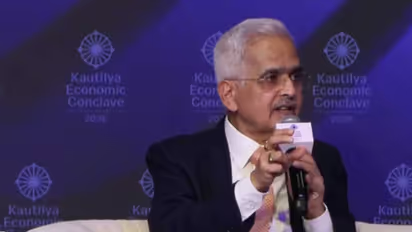
The government is moving to build domestic capacity for rare-earth permanent magnets, which are critical for automobiles, electronic hardware and other manufacturing, Principal Secretary-2 to the Prime Minister Shaktikanta Das said at the Kautilya Economic Conclave 2026.
Das said the government has responded to vulnerabilities in the global rare-earth magnet supply chain by initiating measures to develop domestic capabilities in the sector, pointing to the importance of these materials for a wide range of industries.
“The central government came out immediately thereafter with a major initiative to develop domestic capacity in rare earth permanent magnets,” Das said.
He said rare-earth magnets are an important component for manufacturing and that building domestic capacity would be relevant for sectors including automobiles and electronic hardware. “Because that is one critical component on which automobile manufacturing, electronic hardware manufacturing, and so much other manufacturing depends,” Das said.
Das was referring to China's earlier restrictions on rare-earth related exports, which he said had highlighted the extent of global dependence on Chinese supplies. “China had imposed certain restrictions. It was a problem for almost the whole world, and because almost 80 to 90% of rare earth magnet supply and that entire ecosystem originates in China,” he said.
China's Export Controls
The remarks point to a broader push to strengthen India's domestic capabilities in a strategically important part of the manufacturing supply chain, with rare-earth permanent magnets having applications across multiple industries. China's Ministry of Commerce had earlier announced expanded rare-earth export controls in October 2025, as per a news report by Reuters.
The ministry said the measures covered additional rare-earth elements and related materials, while also adding scrutiny for certain foreign companies using Chinese rare-earth materials or equipment. The rules included controls covering rare-earth permanent magnet materials and components containing specified rare earths.
The ministry's notification listed samarium-cobalt permanent magnets and certain neodymium permanent magnets containing terbium or dysprosium, as well as parts, components and modules containing these materials.
The notification also said export applications for certain advanced semiconductor-related items and artificial intelligence research with potential military applications would be considered on a case-by-case basis, Reuters reported.
Against this backdrop, Das's comments suggest that developing domestic rare-earth magnet capacity is being viewed as an important part of strengthening the manufacturing ecosystem. (ANI)
(Except for the headline, this story has not been edited by Asianet Newsable English staff and is published from a syndicated feed.)Stay updated with all the latest Business NewsShare Market NewsIPOsGold PriceDA Hike8th Pay CommissionAsianet News Official App