Economists welcome RBI's decision to hold repo rate, neutral stance
Synopsis
Economists laud RBI's call to keep the repo rate at 5.25% with a neutral stance. They cite easing inflation, better capital inflows, and adequate liquidity as reasons, noting the MPC also raised its FY27 growth forecast to 6.7%.
Economists Weigh In on Policy Outcome
CRISIL: Policy Aligned with Expectations
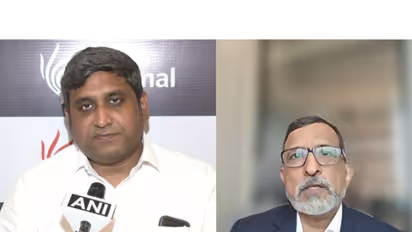
Reacting to the policy, CRISIL Chief Economist D K Joshi said the outcome was largely in line with market expectations. "We were expecting a neutral stance. We were expecting the policy rate to remain unchanged. We did not expect growth and inflation forecasts to change significantly... the policy was very much aligned with what the market was expecting," he told ANI.
On inflation risks, Joshi said food inflation would become a concern only if a "very intense El Nino" leads to prolonged dry spells, adding that the current reservoir position and rainfall remain comfortable. He also said improving capital inflows should help finance a wider current account deficit this year, making "the rupee... more stable this year."
CareEdge: Neutral Stance Provides Flexibility
Rajani Sinha, Chief Economist at CareEdge Ratings, said the RBI's neutral stance gives it flexibility to respond to evolving macroeconomic conditions without committing to a specific policy direction. "The environment is so fluid that it would be better for the central bank to leave the future decisions more dependent on the data and how the global macro scenario unfolds," she said, adding that food inflation is expected to peak in the third quarter before moderating in the final quarter of FY27.
Sinha also said India is likely to maintain a comfortable current account deficit of around 1 per cent of GDP this fiscal year, while stronger capital inflows are expected to support the balance of payments. She added that liquidity is likely to remain abundant, and the RBI may eventually need to take steps "to reduce liquidity in the system" rather than inject more funds.
Piramal Group: 'Boring is Beautiful'
Piramal Group Chief Economist Debopam Chaudhuri described the policy as "boring is beautiful", saying maintaining the status quo was the appropriate decision. He said falling crude oil prices and easing weather-related risks could keep inflation below the RBI's third-quarter projection, giving the central bank room to maintain its pause through the rest of the calendar year.
Chaudhuri also said the RBI is likely to remain proactive in providing short-term liquidity if required, while adding that he does not see the need for open market operations (OMO) at this stage. (ANI)
Stay updated with all the latest Business NewsShare Market NewsIPOsGold PriceDA Hike8th Pay CommissionAsianet News Official App