EAC-PM a 'sounding board' for policy, not for crisis: Nilesh Shah
Synopsis
The EAC-PM acts as a "sounding board" for policymaking and not day-to-day crisis management, says member Nilesh Shah. He clarified the council's focus is on long-term policy, citing process simplification and patent efficiency as key inputs.
EAC-PM: A 'Sounding Board' for Policymaking
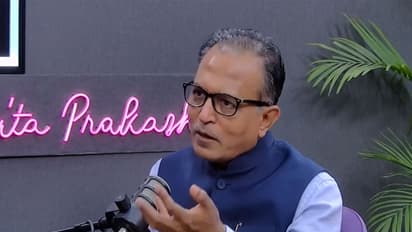
The Economic Advisory Council to the Prime Minister (EAC-PM) primarily acts as a "sounding board" for policymaking and does not engage in day-to-day crisis management, said Nilesh Shah, Member of the council.
Explaining the functioning of the council in an interview with ANI, Shah said, "We are like the sounding board for the Prime Minister... compared to let's say Chief Economic Advisor or NITI Aayog, which are full-time institutions... ours is more like contributing into policymaking."
Council's Functioning and Structure
He noted that the EAC-PM comprises full-time members and part-time members, with the bulk of research and analytical work undertaken by the former. "The majority of workload is taken by the chairman and full-time members... we have regular meetings amongst ourselves where... research on policymaking is shared and inputs are taken. The council meets on a regular basis, about once a fortnight with members and twice a year with the prime minister. The PM also calls meetings as and when required," he said.
Focus on Long-Term Policy, Not Crisis Management
Shah emphasised that while the council may increase consultations during turbulent periods, its role remains focused on long-term policy rather than immediate crisis response. "Undoubtedly, whenever there is a crisis... more meetings happen. But please remember that we are more for policy making than for day-to-day crisis management," he said.
Key Policy Contributions
Highlighting the council's contributions, Shah pointed to initiatives such as process simplification and improving patent efficiency. "One of the agenda pushed by EACPM was process simplification... including Jan Vishwas Bill. The second one was improving efficiency of patent offices... now number of patents is increasing significantly," he added.
Individual Expertise and Role Clarification
On his individual role, Shah said he contributes insights from his expertise in financial markets. "My expertise is in the market. If I find something which is needed from a policy-making point of view, I pass it on to the EACPM secretariat. Sometimes we also get inquiries from PMO about policy making," he noted.
The remarks come amid heightened global uncertainties, where questions often arise about the government's institutional response mechanisms. Shah clarified that while bodies like the EAC-PM provide critical policy inputs, operational crisis handling lies elsewhere in the government framework. "We are more for policy making than day-to-day stuff," he reiterated.
(ANI)
Stay updated with all the latest Business NewsShare Market NewsIPOsGold PriceDA Hike8th Pay CommissionAsianet News Official App