Digital India programme advances inclusion, bridges divide: Vaishnaw
Synopsis
Union Minister Ashwini Vaishnaw said the Digital India programme is advancing inclusion and bridging the digital divide with affordable internet and strong DPI, citing the success of Aadhaar, UPI, and the government's focus on AI and cybersecurity.
The Digital India programme is successfully advancing digital inclusion and strengthening the nation's Digital Public Infrastructure (DPI) through a strategic focus on accessibility and affordability.
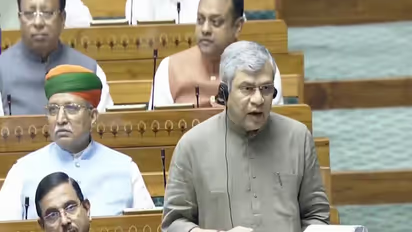
Union Minister for Electronics and Information Technology Ashwini Vaishnaw said in Lok Sabha on Wednesday, noting that the initiative has bridged the digital divide by increasing internet access and providing robust digital solutions. "Under the leadership of PM @narendramodi Ji, Digital India is advancing digital inclusion through greater access, affordability & strong Digital Public Infrastructure," the Minister said.
Bridging the Digital Divide
The Minister stated that through this programme, India has bridged the digital divide using a three-pronged strategy: Increasing access to the internet, making the internet affordable and providing digital public infrastructure.
He informed the House that India's telecom tariffs remain 25 times less than the global average, a feat made possible by transparency in the sector.
The Minister highlighted that the country is now uniquely placed among large economies for its successful implementation of DPI.
Aadhaar and Direct Benefit Transfers
The Minister noted that over 1.43 billion Aadhaar numbers have been generated to date, providing a universal digital identity that enables access to welfare schemes.
This infrastructure facilitates Aadhaar-linked Direct Benefit Transfers for 328 schemes across 56 Ministries, directly transferring cash benefits to bank accounts. This has been done with the requirement of multiple documents and has eliminated duplicate or fake beneficiaries.
In West Bengal alone, more than 10.67 crore Aadhaar IDs have been generated.
Dominance in Digital Payments
Regarding digital payments, the Unified Payments Interface (UPI) now serves 460 million users and 6.5 crore merchants.
The platform connects 685 banks and powers 81 per cent of India's digital payments, accounting for nearly 49 per cent of global real-time digital transactions.
National AI Strategy and Safeguards
The Minister also addressed Artificial Intelligence, stating that the national strategy aims to "address India-centric challenges, create opportunities and ultimately improve the lives of citizens."
The government remains conscious of potential harms from AI, particularly concerning children.
Legal Framework for Child Safety
The Minister detailed that the Information Technology Act and the Digital Personal Data Protection Act, 2023, provide specific safeguards. These laws mandate "verifiable consent of the parent or lawful guardian before processing any personal data of a child" and prohibit tracking or targeted advertising directed at children.
Combating Cybercrime
To combat cybercrime, the Ministry of Home Affairs operates the National Cyber Crime Reporting Portal with a focus on crimes against children.
Furthermore, over 4,309 awareness workshops have been conducted nationwide, covering more than 9.63 lakh participants to promote cyber hygiene and security. (ANI)
(Except for the headline, this story has not been edited by Asianet Newsable English staff and is published from a syndicated feed.)Stay updated with all the latest Business NewsShare Market NewsIPOsGold PriceDA Hike8th Pay CommissionAsianet News Official App