Delhi's new EV policy a model for other states to follow: ASSOCHAM
Synopsis
ASSOCHAM welcomed the Delhi govt's new EV Policy, calling it a model for other states. The policy aims to make EVs affordable, curb air pollution, and provide scrappage incentives to accelerate the shift away from petrol and diesel vehicles.
Industry body ASSOCHAM on Wednesday welcomed the Delhi government's new Electric Vehicle (EV) Policy, saying it could become a model for other states while making electric vehicles more affordable and accelerating the shift away from polluting petrol and diesel vehicles.
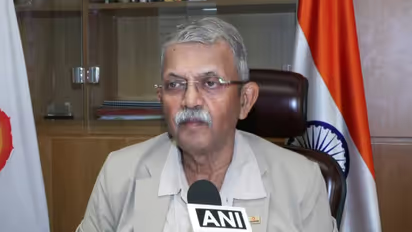
Reacting to the policy in a conversation with ANI, the Associated Chambers of Commerce and Industry of India (ASSOCHAM) Secretary General Saurabh Sanyal said the initiative would have benefits that go beyond the national capital.
"ASSOCHAM applauds the EV policy which has been announced by the Delhi government... This will not only benefit the citizens of Delhi and NCR, but it will also give a start to all the other states of India," Sanyal told ANI.
He said the policy comes at a time when Delhi continues to grapple with severe air pollution, particularly during winter months. "We all know that there is a big environmental problem in Delhi... with this policy... the biggest benefit is that electric vehicles will become very popular in Delhi and NCR," he said.
Policy Details and Financial Outlook
The Delhi government on Monday approved the Delhi EV Policy 2026, which came into effect from July 1. The policy will remain in force until March 31, 2030. The government estimates that more than Rs 7,000 crore will be invested directly over the next four years, while the overall benefit to citizens, including tax exemptions and EV infrastructure, is expected to exceed Rs 15,000 crore.
Incentives to Drive Adoption
Highlighting another key feature of the policy, Sanyal said owners replacing older petrol and diesel vehicles would benefit from scrappage incentives. "Those who have petrol cars or diesel cars... they will get value on residual value, their cost will be partially reimbursed and they will be able to buy new electric vehicles," he said.
He added that the policy could also help make electric vehicles more affordable. "The price of electric vehicles... will become affordable for a common man... this is an example which the Delhi government is presenting... and because of this, the country is going to get largely and hugely benefited," Sanyal said.
The policy places strong emphasis on scrappage incentives alongside purchase subsidies to accelerate the replacement of older, polluting vehicles with zero-emission alternatives. Owners replacing BS-IV or older two-wheelers with electric vehicles will receive an additional Rs 10,000 scrappage incentive, while three-wheeler owners will get Rs 25,000, N1 commercial truck owners up to Rs 50,000, and owners of BS-IV or older four-wheelers shifting to electric cars will be eligible for a Rs 1 lakh scrappage incentive. These will be available over and above the purchase incentives announced under the policy.
The policy also provides 100 per cent exemption from road tax and registration fees for all pure electric vehicles. For four-wheelers, the exemption will apply to vehicles with an ex-showroom price of up to Rs 30 lakh.
Need for a Supporting Ecosystem
Ayush Lohia, CEO of electric three-wheeler manufacturer YOUDHA, also welcomed the policy but stressed that its success would depend on the supporting ecosystem. "A balanced and phased approach to transitioning from petrol-powered two-wheelers to electric mobility will be key to achieving Delhi's clean mobility ambitions," Lohia said.
He added that while the proposed phase-out of new petrol-powered two-wheelers after 2028 is "a significant step", "its success will depend on the readiness of the overall ecosystem. Expanding charging infrastructure, improving access to affordable EV financing, strengthening supply chains, and increasing consumer awareness will be essential to ensure a smooth and inclusive transition for both manufacturers and consumers."
"If implemented effectively, Delhi can set a strong benchmark for electric mobility adoption across India," he added. (ANI)
(Except for the headline, this story has not been edited by Asianetnews Editorial staff and is published from a syndicated feed.)Stay updated with all the latest Business NewsShare Market NewsIPOsGold PriceDA Hike8th Pay CommissionAsianet News Official App