CEA: India can hit 7.5% GDP growth with 30% savings rate, reforms
Synopsis
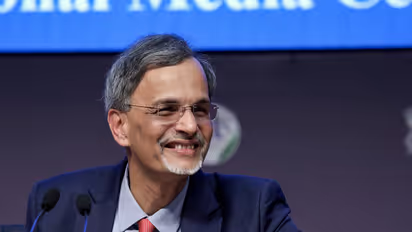
CEA V. Anantha Nageswaran said India can achieve 7.5% GDP growth with a 30% savings rate if capital efficiency improves through reforms, stressing the need for continued focus on manufacturing, logistics, and stable tax policies.
India's Growth Path with Modest Savings
Chief Economic Advisor (CEA) V. Anantha Nageswaran on Friday said India can achieve robust economic growth even with a savings rate of around 30 per cent, provided policy reforms continue to improve capital efficiency and reduce costs of investment. In an exclusive interview with ANI, responding to a question on how India can meet the ambitious growth targets of Viksit Bharat with a relatively modest savings rate, Nageswaran said growth depends not just on the volume of investment but also on how efficiently capital is used.
He stressed the importance of infrastructure development, deregulation, ease of doing business, and process reforms to lower the Incremental Capital Output Ratio (ICOR). "With a 30% savings rate, India can still reach around 7.5% real GDP growth if capital efficiency improves," he said.
Focus on Manufacturing Sector
While acknowledging the strong performance of the services sector, the CEA said manufacturing continues to require focused attention. "To attract global value chains, there is a need for stable and predictable tax policies, simpler processes, better logistics, last-mile connectivity, affordable power, access to land, smoother approval mechanisms, and a strong talent ecosystem. We have been working on all these areas and need to continue to do so," he said.
State Expenditure and Fiscal Prudence
When asked whether the Centre would recommend a specific percentage of GDP for states to spend on such measures, Nageswaran said no such quantitative target was being proposed. "States already operate within fiscal deficit and debt parameters. The focus should be on the quality of expenditure rather than just the quantum." He also cautioned about unintended behavioral effects of unconditional cash transfers, particularly on labour availability.
Explaining Rupee Depreciation
Addressing concerns over the rupee's depreciation despite low domestic inflation, Nageswaran said, "India remains a capital-importing country. When capital flows are weaker, the currency inevitably feels the impact. That is what we are seeing."
Outlook on Foreign Direct Investment (FDI)
On Foreign Direct Investment (FDI), the CEA noted that while net FDI inflows appear weak, gross FDI into India is actually rising. He attributed the softness in net figures to global factors, profit repatriation from older investments, geopolitical uncertainties, and increased outward direct investment (ODI) by Indian companies seeking to access overseas markets. "These are short-term factors. India's long-term attractiveness remains intact," he said while expressing confidence that as global uncertainties ease, net FDI inflows would improve and the need for Indian firms to invest abroad would also moderate.
Addressing Education and Dropout Rates
Speaking on the question around quality of education in the schools remains a concern, and what policies are required improve the school dropout rates, CEA said, "India has largely addressed the issue of school enrolment. Dropout rates are influenced by social, cultural, and economic factors. Rising household incomes could reduce the pressure on families to withdraw children from school for work." He also highlighted the role of better teaching methods, nutritious meals, and engaging curricula in retaining students and improving learning outcomes.
Public Spending: Outcomes Over Outlays
Responding to criticism that India spends a relatively low share of GDP on public health and education, Nageswaran said combined spending by the Centre and states is higher than commonly perceived. More importantly, he argued that outcomes matter more than headline spending numbers. "Outlays do not automatically translate into outcomes. If we can achieve the same or better results with lower spending by reducing leakages and improving efficiency, then the amount spent alone should not be the sole measure of success." (ANI)
Stay updated with all the latest Business NewsShare Market NewsIPOsGold PriceDA Hike8th Pay CommissionAsianet News Official App