Union Budget 2026: India Set to Become Global Hub for Heritage, Spiritual and Medical Tourism
Synopsis
Budget 2026–27 proposes initiatives to promote India as a global hub for heritage, spiritual, and medical tourism, with investments in tier-II cities, monasteries, eco-tourism, trekking circuits, and medical tourism hubs to boost growth.
The Indian government on Sunday proposed an outlay of ₹20,000 crore over the next five years to strengthen urban infrastructure in tier-II and tier-III cities, including temple towns, as part of a broader effort to unlock their economic potential.
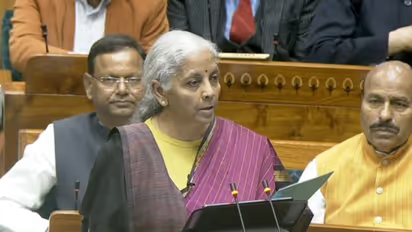
Presenting the Union Budget 2026–27, Finance Minister Nirmala Sitharaman highlighted the role of cities as India’s "engines of growth, innovation and opportunities", noting that the government’s focus will expand beyond metros to smaller urban centres that require modern infrastructure and essential amenities — creating a strong foundation for tourism-led growth.
City Economic Regions To Boost Tourism and Commerce
As part of the plan, the Centre will identify and map City Economic Regions (CERs) based on specific growth drivers such as tourism, manufacturing, services or logistics. These CERs are envisioned as hubs supporting surrounding areas, with an allocation of ₹5,000 crore per CER over five years to improve infrastructure and promote local economic activity, including cultural and tourism initiatives.
India To Be Promoted As Medical Tourism Hub
Highlighting healthcare-led tourism, Sitharaman announced, "To promote India as a medical tourism hub, I propose a scheme to support states to set up 5 regional hubs in the country."
This move aims to position India as a global destination for affordable, quality medical care and specialised treatments, attracting international tourists.
Heritage and Cultural Tourism Expansion
The Finance Minister proposed developing 15 archaeological sites into vibrant, experience-based cultural destinations, aiming to boost visitor engagement and local employment. Additionally, 10,000 tourist guides will be trained to improve the quality of tourism services across the country.
The Budget also plans to operationalise 20 new National Waterways over the next five years, strengthening inland water transport and supporting sustainable, eco-friendly tourism.
Seaplanes to Enhance Remote and Adventure Tourism
To improve last-mile connectivity, Sitharaman said, "To enhance last-mile and remote connectivity and promote tourism, I propose to give incentives to indigenise manufacturing of seaplanes."
She further added that a seaplane VGF scheme will be introduced to support operations, expanding access to remote destinations and adventure tourism circuits.
Sustainable Trekking and Eco-Tourism Initiatives
Emphasising eco-tourism, the Finance Minister noted, "India has the potential and opportunity to offer world-class trekking and hiking experiences."
She announced that ecologically sustainable mountain trails will be developed in Himachal Pradesh, Jammu and Kashmir, the Aravalli range, the Eastern Ghats and the Western Ghats to promote responsible, nature-based tourism.
Spiritual Tourism in North East Monasteries
The Budget also prioritises spiritual and cultural tourism in the North Eastern states, particularly around historic Buddhist monasteries in Arunachal Pradesh, Sikkim and Assam. Improved infrastructure, trained guides, and enhanced connectivity aim to make these monasteries accessible to tourists while preserving the region’s cultural and ecological heritage.
Tourism at the Heart of Budget 2026–27
With a multi-pronged focus on heritage, spiritual, eco, adventure, and medical tourism, the Union Budget 2026–27 positions tourism as a key driver of growth for emerging cities and regions. These initiatives are expected to generate employment, enhance infrastructure, and promote India as a global tourism destination.
Stay updated with all the latest Business NewsShare Market NewsIPOsGold PriceDA Hike8th Pay CommissionAsianet News Official App