AI and Modernization Drive Profitability in Indian Rice Milling Sector
Synopsis
Experts at the Bharat International Rice Conference 2026 highlight AI, continuous drying, and byproduct management as key drivers to modernize India's rice milling industry, improve recovery yields, and significantly boost factory profitability.
Technological Advancements in Rice Milling
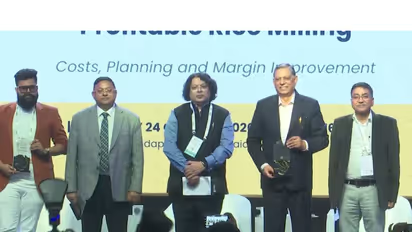
New Delhi [India], October 24 (ANI): Adoption of artificial intelligence (AI), continuous drying systems and improved utilisation of byproducts is expected to emerge as key drivers of profitability in India's rice milling industry, with experts at the Bharat International Rice Conference 2026 highlighting the need to modernise processing practices and reduce grain breakage and buyer rejections.
Samresh Chatterjee, Director and Co-founder of Kinetic Group, said India was behind countries such as China in adopting AI-based rice milling, but the technology could begin entering Indian factories within six months. "In India we do not have AI till date in our rice milling industry. But China is using it fully," Chatterjee said, explaining that AI-enabled systems could automate husking, whitening, polishing, colour sorting and blending. He said the company had already installed such technology at a factory in Ghaziabad and expected to develop a fully automated setup combining mechanical machines and colour sorters. Such systems could allow a single operator to set production parameters and oversee operations, reducing dependence on manual intervention.
Improving Recovery and Quality
Meanwhile, J.P. Sharma, who heads key account management at Bühler Group, said continuous drying was becoming increasingly important for maintaining grain quality and improving rice recovery. "Continuous drying is the technology which is going to drive it," Sharma said, adding that the approach could improve yield by 1-2 per cent while reducing steam consumption. He stressed that milling efficiency depended not only on processing machinery but also on paddy procurement, cleaning, drying and moisture management.
Byproduct Management and Market Economics
Ajay Sharma, National Vice-President of Basmati at IREF, highlighted the importance of managing rice bran, husk and broken rice to improve profitability. He said rice bran needed to be processed and sold quickly to preserve its value, while proper grading and polishing could improve the realisation from broken rice. "If we can manage all these byproduct properly, your profitability will increase by at least one and a half percent," he said.
Expanding Opportunities in Ethanol
The panel also discussed the growing role of ethanol production in improving the economics of non-Basmati rice milling. J.P. Sharma said demand from ethanol producers had strengthened the market for broken rice, which previously could be difficult to sell. Sagar Ratnani, Director of Sai Hanumanth Industries, said economies of scale and the use of byproducts in captive solvent extraction, ethanol and husk pellet plants were central to his company's business model. The discussion underscored the need for technology adoption, better process control and integrated byproduct utilisation to improve recovery, reduce losses and strengthen the competitiveness of India's rice milling industry. (ANI)
Stay updated with all the latest Business NewsShare Market NewsIPOsGold PriceDA Hike8th Pay CommissionAsianet News Official App